
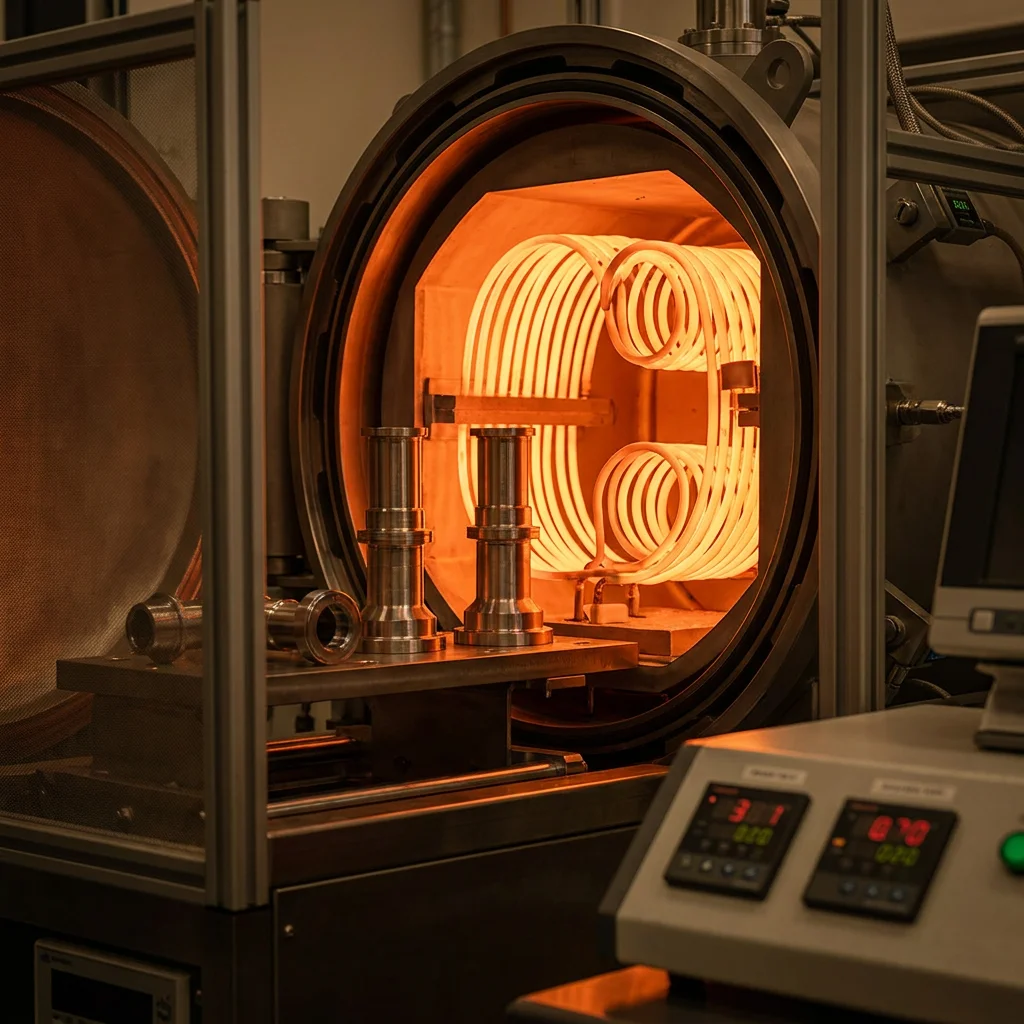
The 2026 Strategic Guide to High-Temperature Inconel Alloys and Resistance Heating Systems: Engineering for Extreme Thermal Performance
As industrial manufacturing in June 2026 continues to push the boundaries of thermal efficiency and mechanical durability, the role of advanced materials has never been more critical. High-temperature alloys, particularly the nickel-based Inconel series, and advanced resistance heating wires are the essential components that enable modern thermal engineering. From the combustion chambers of hypersonic aircraft engines to the precision heating elements in semiconductor wafer fabrication, these materials must maintain structural integrity and chemical stability at temperatures often exceeding 1000°C. This comprehensive technical guide explores the metallurgical foundations, technical specifications, and industrial applications of these alloys, providing a strategic roadmap for B2B procurement and engineering teams.
1. The Metallurgical Evolution of Superalloys in 2026
The landscape of industrial metallurgy in 2026 is defined by a move toward "Precision superalloys." These materials are no longer just designed for bulk performance; they are engineered at the molecular level to resist specific degradation mechanisms like creep, fatigue, and high-temperature oxidation. Nickel-based superalloys, such as the Inconel family, utilize a complex matrix of alloying elements including Chromium, Molybdenum, Niobium, and Aluminum to achieve their extraordinary properties.
One of the key advancements in 2026 is the refined control over the gamma-prime (γ') and gamma-double-prime (γ'') strengthening phases. These intermetallic precipitates are responsible for the high-temperature strength of alloys like Inconel 718 . By optimizing the distribution and stability of these phases through advanced vacuum induction melting (VIM) and electroslag remelting (ESR), modern manufacturers can produce alloys with significantly longer fatigue lives and higher reliability than previous generations.
2. Deep Dive: The Core Inconel Series for High-Temperature Service
Inconel is a trademarked family of austenitic nickel-chromium-based superalloys. In the 2026 industrial market, four specific grades have emerged as the standard for high-temperature and high-stress applications.
Inconel 600 (UNS N06600)
Inconel 600 is a versatile nickel-chromium alloy designed for use in environments ranging from cryogenic temperatures up to 1095°C (2000°F). Its high nickel content enables it to maintain considerable resistance under reducing conditions and makes it resistant to corrosion by a variety of organic and inorganic compounds. In 2026, it is a primary material for chemical processing heaters, stills, and bubble towers.
Inconel 601 (UNS N06601)
While similar to Inconel 600, alloy 601 adds aluminum to the Ni-Cr base. This addition promotes the formation of a extremely adherent oxide scale that resists spalling even under severe thermal cycling. This makes Inconel 601 the gold standard in 2026 for radiant tubes, furnace muffles, and thermal processing equipment used in aerospace and automotive heat treatment.
Inconel 625 (UNS N06625)
Inconel 625 is a non-age-hardenable alloy strengthened primarily by the addition of molybdenum and niobium to the nickel-chromium matrix. This gives it exceptional strength and toughness from cryogenic temperatures to 980°C (1800°F). In 2026, its outstanding resistance to pitting, crevice corrosion, and fatigue makes it indispensable for subsea oil and gas piping and aerospace exhaust systems.
Inconel 718 (UNS N07718)
Inconel 718 is a precipitation-hardenable alloy designed to provide exceptionally high yield, tensile, and creep-rupture properties at temperatures up to 700°C (1300°F). Its excellent weldability and resistance to post-weld cracking are key factors in its widespread use for gas turbine engine components and high-strength bolts in 2026.
| Alloy Grade | Primary Alloys | Max Operating Temp (°C) | Core Application in 2026 |
|---|---|---|---|
| Inconel 600 | Ni, Cr, Fe | 1095 | Chemical processing reactors |
| Inconel 601 | Ni, Cr, Al | 1250 | Industrial radiant tubes |
| Inconel 625 | Ni, Cr, Mo, Nb | 980 | Aerospace engine exhaust |
| Inconel 718 | Ni, Cr, Fe, Nb | 700 | Gas turbine discs |
3. Resistance Heating Wires: Efficiency and Longevity in 2026
The electrification of industrial heating is a major trend in 2026, driven by global decarbonization efforts. The efficiency and lifespan of these systems depend entirely on the metallurgy of the resistance heating alloys. The two primary categories remain Nickel-Chromium (NiCr) and Iron-Chromium-Aluminum (FeCrAl).
Nickel-Chromium (NiCr) Alloys
NiCr alloys, such as Ni80Cr20, are favored for their excellent mechanical stability in the "hot" state. They maintain high ductility and are not prone to becoming brittle after long periods of use. They also possess higher emissivity compared to FeCrAl, leading to more efficient radiant heat transfer in industrial ovens. In 2026, they are the standard for high-end domestic appliances and specialized lab furnaces.
Iron-Chromium-Aluminum (FeCrAl) Alloys
FeCrAl alloys (e.g., 0Cr27Al7Mo2) offer a higher maximum operating temperature (up to 1425°C) and higher electrical resistivity than NiCr alloys. They are also more cost-effective and have a lower density. Their protection comes from a very stable alumina (Al2O3) oxide layer. However, they become brittle after service, making them difficult to handle or repair once they have been heated. They are the preferred choice for large-scale sintering and ceramic kilns in 2026.
| Property | NiCr 80/20 | FeCrAl (0Cr25Al5) |
|---|---|---|
| Max Temp in Air (°C) | 1200 | 1350 |
| Resistivity (μΩ·m) | 1.09 | 1.42 |
| Density (g/cm³) | 8.40 | 7.10 |
| Ductility after use | Excellent | Poor (Brittle) |
| Cost Index | Higher | Lower |
4. Critical Industrial Applications in 2026
High-temperature alloys and resistance heating series are integral to several high-growth sectors in 2026:
Aerospace Propulsion and Hypersonic Flight
As the aerospace industry explores hypersonic flight regimes, the thermal management of skin and engine components becomes critical. Inconel 625 and 718 are used for heat shields and structural honeycombs that protect sensitive internal systems from the frictional heat of extreme velocities.
Advanced Nuclear and Hydrogen Energy
Next-generation nuclear reactors and high-temperature steam electrolysis for hydrogen production operate at temperatures where standard stainless steels simply cannot survive. Inconel 601 and specialized NiCr alloys are required for their combination of radiation stability and high-temperature corrosion resistance.
Semiconductor and Electronic Manufacturing
The production of the latest 2nm and 1nm semiconductor chips requires exceptionally precise and uniform heating. Resistance heating elements made from high-purity NiCr alloys ensure the thermal uniformity needed for wafer processing in clean-room environments.
5. Best Practices for Material Selection and Optimization
To maximize the performance of these premium materials in 2026, B2B procurement and engineering teams should consider several factors:
Atmospheric Compatibility: Ensure the chosen alloy can form a stable oxide scale in the operating atmosphere (oxidizing, reducing, or vacuum).
Thermal Cycling Profiles: Extreme thermal shock can cause oxide spalling. Designing gradual ramp-up and ramp-down phases will significantly extend the life of Inconel and heating elements.
Mechanical Support: At high temperatures, metals lose tensile strength. Ensure that heating elements are properly supported by ceramic insulators to prevent sagging and electrical shorts.
Quality Verification: In 2026, always insist on materials that are certified to ASTM or ISO standards with full Mill Test Reports (MTRs) to ensure metallurgical purity.
6. The Future of Superalloys: Trends for 2027 and Beyond
Looking past 2026, the industry is moving toward "High-Entropy Alloys" (HEAs) and the integration of additive manufacturing (3D printing) for complex Inconel components. 3D printing allows for the creation of internal cooling channels within components that were previously impossible to manufacture, leading to even higher operating temperatures and efficiency gains. Additionally, the use of AI-driven material discovery is expected to accelerate the development of the next generation of superalloys with tailored thermal expansion and oxidation characteristics.
7. Frequently Asked Questions (FAQ) for 2026 Engineering Teams
Q1: Why is Inconel 601 better than 600 for high-temperature oxidation?
A: The addition of aluminum in Inconel 601 creates a more stable alumina scale that is much more resistance to internal oxidation and spalling at temperatures above 1100°C compared to the chromia scale of Inconel 600.
Q2: Can I weld Inconel 718 to other metals?
A: Yes, Inconel 718 is specifically designed for excellent weldability. It can be joined to many other nickel-based alloys and stainless steels, provided the correct filler metals and post-weld heat treatment (PWHT) are used to prevent cracking.
Q3: What is the main cause of failure in NiCr heating elements?
A: The most common failure mode is "green rot," which is the internal oxidation of chromium in reducing atmospheres. This can be prevented by maintaining an oxidizing atmosphere or by using specialized alloys designed for reducing conditions.
Q4: How does 2026 manufacturing ensure the quality of resistance wires?
A: Modern production lines utilize continuous electromagnetic testing (Eddy Current) and laser micrometry to detect surface flaws and diameter inconsistencies in real-time, ensuring that every meter of wire meets strict resistance tolerances.
Conclusion: Partnering for Technical Resilience
In the high-stakes industrial landscape of 2026, the reliability of your thermal systems is a direct result of the materials you select. High-temperature Inconel alloys and advanced resistance heating series represent the peak of metallurgical engineering, providing the performance required for the most demanding applications. At DLX Factory, we are dedicated to providing our global partners with the technical expertise and high-quality materials they need to succeed. Whether you are building a next-generation turbine or maintaining a critical industrial furnace, our team is ready to support you with data-driven material recommendations and reliable supply chain solutions.
For more information on our range of Inconel products, technical datasheets, or to receive a quotation for your 2026 project, please reach out to us. Let us work together to build a more efficient and resilient industrial future.
Contact us via the website inquiry form for a detailed technical consultation and competitive quotation.
Publication Date: May 25, 2026
Author: DLX Factory Technical Engineering Division