Comprehensive Guide to Resistance & Heating Alloys (FeCrAl & Nichrome) for Industrial Furnaces
Introduction: The Critical Role of Heating Alloys in Modern Industry
In the high-stakes world of industrial thermal processing, the performance of a furnace is only as reliable as its heating elements. Whether it is for glass tempering, ceramic firing, or metal heat treatment, the choice of resistance heating alloy dictates efficiency, precision, and operational costs.
As global industries pivot toward electrification to meet carbon-neutral goals, the demand for high-performance alloys like FeCrAl (Iron-Chromium-Aluminum) and Nichrome (Nickel-Chromium) has reached unprecedented levels. DLX Factory, a premier Chinese manufacturer and exporter, stands at the forefront of this evolution, providing the materials that power the world’s most demanding industrial kilns and furnaces.
1. Material Analysis: Decoding the "Big Three" Alloys
Choosing the right alloy requires a deep understanding of chemical composition and its impact on physical properties. At DLX Factory, we specialize in three primary grades that cover 90% of industrial needs.
A. 0Cr21Al4 (Standard FeCrAl)
The 0Cr21Al4 alloy is the workhorse of the FeCrAl family. It is characterized by its excellent cost-to-performance ratio.
Composition: Approx 21% Chromium, 4% Aluminum, balance Iron.
Max Operating Temp: Up to 1250°C (2280°F).
Key Features: It forms a protective layer of aluminum oxide (Al2O3) when heated, which provides high resistivity and good oxidation resistance at a lower price point than nickel-based alloys.
Best Use Case: Domestic appliances, industrial furnaces with moderate temperature requirements, and drying equipment.
B. 0Cr27Al7Mo2 (High-End FeCrAl + Molybdenum)
When standard alloys reach their limit, 0Cr27Al7Mo2 takes over. This is a premium ferritic alloy designed for extreme environments.
Composition: 27% Chromium, 7% Aluminum, and 2% Molybdenum.
Max Operating Temp: Up to 1400°C (2550°F).
Key Features: The addition of Molybdenum (Mo) significantly enhances the alloy’s creep strength (resistance to deformation under heat). The high aluminum content ensures a robust, self-healing oxide layer.
Best Use Case: High-temperature ceramic kilns, diffusion furnaces for semiconductor manufacturing, and laboratory furnaces.
C. NiCr8020 (Premium Nichrome)
NiCr8020 (80% Nickel, 20% Chromium) is the gold standard for high-precision and high-durability heating.
Max Operating Temp: Up to 1200°C (2190°F).
Key Features: Unlike FeCrAl, Nichrome is an austenitic alloy. It remains ductile even after long periods of use (it doesn't become brittle). It has a higher "hot strength" and is non-magnetic.
Best Use Case: High-end industrial furnaces where frequent maintenance is not an option, and environments where mechanical vibration is present.
2. Technical Parameters & Comparison Table
Understanding the data is vital for furnace designers and maintenance engineers. Below are the typical parameters provided by DLX Factory.
| Property | Unit | 0Cr21Al4 (FeCrAl) | 0Cr27Al7Mo2 (FeCrAl) | NiCr8020 (Nichrome) |
|---|---|---|---|---|
| Max Element Temp | °C | 1250 | 1400 | 1200 |
| Resistivity (20°C) | µΩ·m | 1.35 | 1.45 | 1.09 |
| Density | g/cm³ | 7.20 | 7.10 | 8.40 |
| Melting Point | °C | 1500 | 1520 | 1400 |
| Magnetic Prop. | - | Magnetic | Magnetic | Non-Magnetic |
| Microstructure | - | Ferrite | Ferrite | Austenite |
| Elongation | % | >12 | >12 | >20 |
3. Industrial Applications: From Kilns to Laboratories
The versatility of DLX Factory’s alloys allows them to be integrated into various high-tech sectors:
Industrial Kilns (Ceramics & Glass): High-temperature kilns require elements that can withstand long firing cycles. 0Cr27Al7Mo2 is preferred here due to its 1400°C ceiling.
Heat Treatment Furnaces: Used in the automotive and aerospace industries to harden steel or anneal components. NiCr8020 is often chosen for its long-term dimensional stability.
Laboratory Equipment: Muffle furnaces and tube furnaces used in R&D require fast heating rates and precise temperature control.
Diffusion Furnaces: Essential in the semiconductor industry for wafer processing, where material purity and high-temp stability are non-negotiable.
Home Appliances: Toasters, hair dryers, and storage heaters utilize 0Cr21Al4 for its cost-efficiency.
4. Customer Pain Points vs. DLX Factory Solutions
As a leading Chinese exporter, we have listened to thousands of clients. Here is how we solve the most common frustrations:
Pain Point 1: Oxidation and Scaling
The Issue: Many low-quality alloys flake off oxide scales, which can contaminate the product being heated (especially in glass or ceramic firing).
DLX Solution: Our alloys undergo a specialized "pre-oxidation" process. This creates a dense, adherent Al2O3 or Cr2O3 layer that prevents further internal oxidation and eliminates scaling.
Pain Point 2: Short Service Life & Brittleness
The Issue: FeCrAl alloys tend to become brittle after the first heating cycle, making them prone to snapping during maintenance or if the furnace vibrates.
DLX Solution: By optimizing the grain structure and controlling the impurity levels (Sulphur, Phosphorus), DLX Factory produces FeCrAl with better "hot strength" and NiCr with superior ductility, extending element life by up to 30%.
Pain Point 3: Element Sagging (Creep)
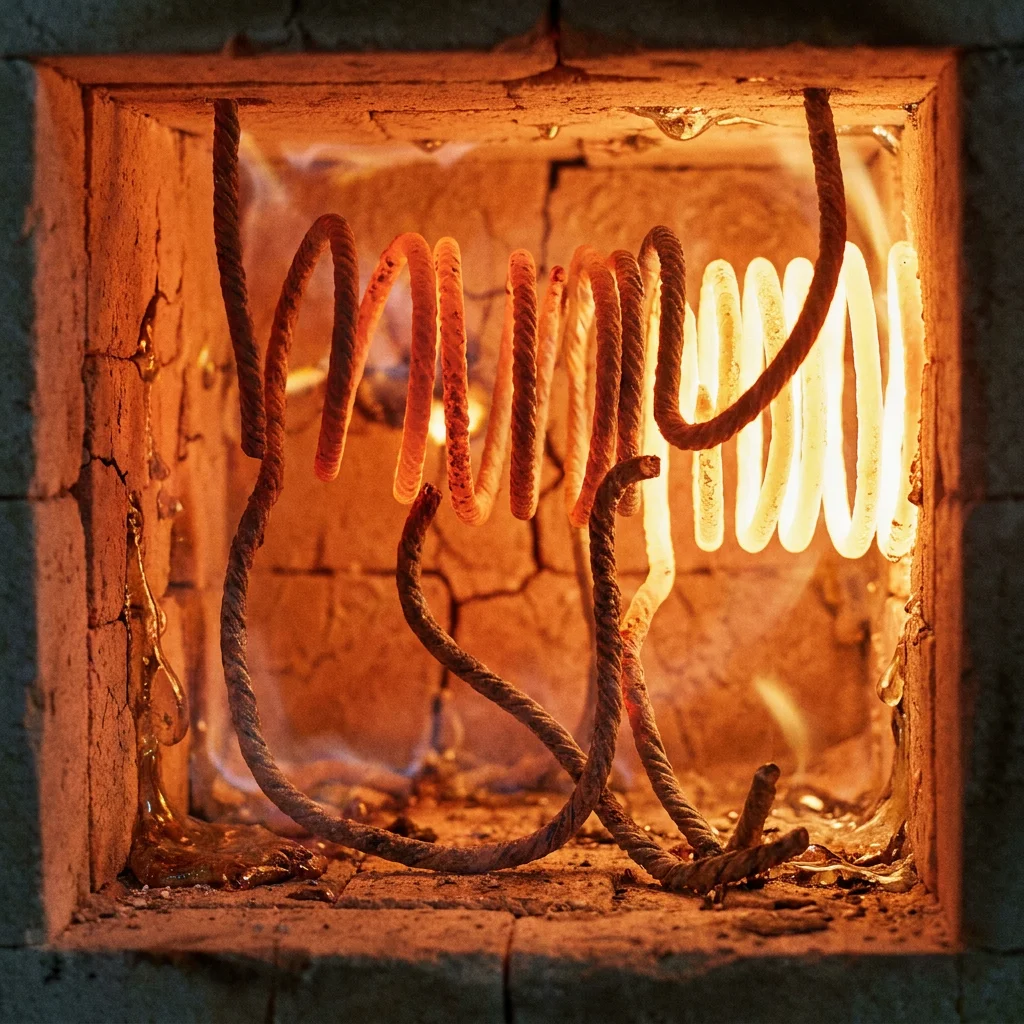
The Issue: At high temperatures, heating coils can "sag" or deform under their own weight, leading to short circuits.
DLX Solution: We recommend and provide 0Cr27Al7Mo2 for high-temp vertical applications. The Molybdenum addition acts as a strengthening agent, keeping the coils in their original geometry longer.
5. Industry Trends for 2026: The Future of Heating
The heating alloy industry is not static. As we look toward 2026, several key trends are emerging:
Decarbonization of Process Heat: Many factories are replacing gas-fired burners with electric heating elements to reduce CO2 emissions. This is driving a massive surge in demand for high-watt-density alloys.
IoT-Integrated Heating Elements: Future elements will be "smart," featuring embedded sensors to track resistance changes in real-time, predicting failure before it happens.
Advanced Powder Metallurgy (PM): DLX Factory is exploring PM alloys that offer even higher temperature limits (up to 1450°C) by incorporating rare earth elements for enhanced oxide stability.
Sustainable Sourcing: Customers are increasingly demanding "Green Alloys." DLX Factory is committed to using recycled nickel and iron where possible, reducing the environmental footprint of our manufacturing process.
6. Why Choose DLX Factory?
Located in the heart of China’s metallurgical hub, DLX Factory (www.dlxfactory.com) is more than just a supplier; we are a strategic partner.
Global Export Expertise: We ship to over 50 countries, ensuring that our products meet international standards like ASTM, DIN, and JIS.
Customization: Whether you need wire, ribbon, strip, or pre-formed coils, we provide bespoke dimensions tailored to your furnace design.
Quality Control: Every batch undergoes rigorous testing, including resistivity checks, tensile tests, and accelerated life testing.
Competitive Pricing: By managing the entire production chain—from melting to final drawing—we offer factory-direct pricing that beats middleman costs.
7. FAQ Module: Common Questions about Heating Alloys
Q: Which is better, FeCrAl or Nichrome?
A: It depends on your priority. FeCrAl is cheaper and handles higher temperatures (up to 1400°C), but it becomes brittle after use. Nichrome is more expensive and capped at 1200°C, but it is much more durable and easier to repair/handle after it has been heated.
Q: How can I extend the life of my heating elements?
A: Avoid frequent "on/off" cycles which cause thermal shock. Ensure the furnace atmosphere is compatible with the alloy (some alloys struggle in reducing atmospheres). Most importantly, ensure the surface load (watts per square cm) is within the recommended limits for the specific grade.
Q: Can DLX Factory provide pre-coiled elements?
A: Yes! We can produce coils based on your resistance (Ohms) and dimensions (Outer Diameter, length) requirements.
Q: What is the difference between 0Cr21Al4 and 0Cr25Al5 ?
A: 0Cr25Al5 has a higher aluminum and chromium content, allowing it to reach slightly higher temperatures (1300°C) and offering better oxidation resistance than the 0Cr21Al4 grade.
8. Atmospheric Compatibility: The Hidden Factor in Alloy Longevity
One of the most overlooked aspects of heating alloy selection is the atmosphere within the furnace. The chemical interactions between the alloy’s surface and the surrounding gases can dramatically alter its lifespan.
Oxidizing Atmospheres (Air)
Both FeCrAl and NiCr perform best in oxidizing atmospheres. In air, FeCrAl forms a stable alpha-alumina layer, while Nichrome forms a chromium oxide layer. These layers act as barriers against further degradation.
Reducing Atmospheres (H2, CO)
In reducing atmospheres, the protective oxide layer may not form correctly or can be stripped away.
FeCrAl: Generally more resistant to sulfur-containing reducing atmospheres than nickel-based alloys.
Nichrome: Can suffer from "Green Rot"—a form of internal oxidation that occurs in certain carbon-rich or low-oxygen reducing environments, leading to rapid failure.
Vacuum Environments
In high-vacuum furnaces, nickel and chromium can slowly evaporate. At temperatures above 1000°C, Nichrome may lose its chromium content, leading to a shift in resistance. FeCrAl is often preferred for vacuum applications due to its slightly more stable aluminum oxide layer, though specialized refractory metals are often needed for extreme vacuums.
9. Installation and Maintenance: Best Practices for Engineers
Even the highest quality wire from DLX Factory can fail prematurely if installed incorrectly. Follow these industry standards to maximize your ROI:
Avoid Surface Damage: Scratches on the surface of the heating wire create "hot spots." Use plastic-coated tools during installation to prevent metal-on-metal gouging.
Ensure Proper Support: For long horizontal runs, use high-alumina ceramic supports. Ensure the spacing (pitch) of the coils is consistent to prevent uneven heating.
Terminal Connection Security: Most failures occur at the "cold tail" connection. Ensure that the terminals are tight and made of compatible materials to avoid galvanic corrosion.
Initial Burn-In: For new elements, a controlled ramp-up (pre-oxidation) helps establish a healthy oxide layer before the furnace is put into full production.
Conclusion: Powering Your Success
The transition to high-efficiency industrial heating is a technical journey. By choosing the right materials—like the robust 0Cr27Al7Mo2 or the versatile NiCr8020—you ensure the longevity of your equipment and the quality of your output.
DLX Factory remains dedicated to providing the global market with top-tier Chinese engineering. Visit www.dlxfactory.com today to download our full catalog or speak with a technical expert about your next industrial furnace project.
Published by the DLX Factory Editorial Team, 2026.
Keywords: Resistance Alloys, Heating Wire, Industrial Furnace, FeCrAl, Nichrome, 0Cr21Al4, 0Cr27Al7Mo2, NiCr8020, Chinese Exporter.