Top Resistance Heating Wire Manufacturers & Suppliers for Industrial Applications
In today’s industrial heating systems, resistance heating wire plays a critical role across sectors such as metallurgy, ceramics, electronics, and aerospace. From high-temperature furnaces to precision heating elements, choosing the right material and supplier directly impacts efficiency, lifespan, and production cost.
As a global exporter of alloy materials, DLX Alloy has worked with clients across more than 30 countries. We’ve seen a recurring question from buyers:
“How do we choose the right resistance heating wire manufacturer?”
This guide answers that question in depth — from materials and applications to real-world problems and supplier evaluation.
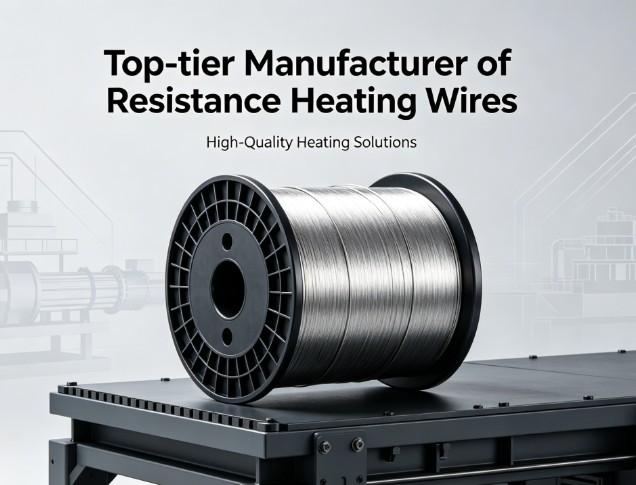
What is Resistance Heating Wire?
Resistance heating wire is a metallic conductor that generates heat when electric current passes through it, based on Joule heating principles.
The most commonly used materials include:
Nichrome (NiCr alloys)
FeCrAl (Iron-Chromium-Aluminum alloys)
These materials are selected based on their:
Electrical resistivity
Oxidation resistance
Maximum operating temperature
Mechanical strength
Common Types of Resistance Heating Wire
1. Nichrome Wire (NiCr)
Excellent oxidation resistance
Stable performance at medium-high temperatures
Widely used in appliances and industrial heaters
2. FeCrAl Wire
Higher maximum temperature than Nichrome
Longer service life
Lower cost in large-scale industrial use
Applications Across Industries
Resistance heating wire is not a niche product — it is foundational to many industries.
Industrial Applications:
| Industry | Application |
|---|---|
| Metallurgy | Heat treatment furnaces |
| Ceramics | Kilns and sintering ovens |
| Electronics | Heating elements |
| Chemical | Reactor heating systems |
| Aerospace | High-temperature testing |
Real Buyer Pain Points (And Solutions)
Pain Point 1: Short Service Life
Many buyers report that heating wires burn out too quickly.
Root Cause:
Low-quality alloy composition
Poor oxidation resistance
DLX Solution:
We control alloy composition precisely and apply advanced surface treatment to extend lifespan by 20–30%.
Pain Point 2: Unstable Resistance Value
This leads to uneven heating and product defects.
Root Cause:
Inconsistent wire diameter
Poor production control
DLX Solution:
Our precision drawing process ensures tight tolerance (±0.01 mm), guaranteeing stable resistance.
Pain Point 3: High Energy Consumption
Inefficient materials increase operational cost.
Root Cause:
Incorrect material selection
DLX Solution:
We recommend FeCrAl for high-temp continuous use, reducing energy cost over time.
Pain Point 4: Supplier Reliability Issues
Late delivery, inconsistent quality, poor communication.
DLX Solution:
Stable export experience
Strict quality inspection
Fast response sales team
Key Parameters Explained
Understanding technical parameters helps buyers avoid costly mistakes.
Important Parameters:
Resistivity (μΩ·m) → Determines heat generation efficiency
Maximum Operating Temperature → Defines safe usage range
Elongation → Indicates flexibility
Density → Affects weight and design
Resistance Heating Wire Specification Table
Industry Trends in 2026
1. Shift Toward Energy Efficiency
Manufacturers are demanding materials that reduce power consumption.
→ FeCrAl is gaining popularity due to lower energy cost.
2. Customization Demand Increasing
Standard wires are no longer enough.
Clients now require:
Specific resistance values
Custom diameters
Pre-formed heating elements
3. Supply Chain Stability Becomes Critical
Global disruptions have pushed buyers to seek:
Reliable exporters
Long-term partners
Comparison: Choosing the Right Supplier
| Criteria | Typical Supplier | DLX Alloy |
|---|---|---|
| Quality Consistency | Medium | High |
| Customization | Limited | Full customization |
| Delivery Time | Unstable | Reliable |
| Technical Support | Basic | Professional |
| Export Experience | Limited | Global |
Why More Buyers Choose DLX Alloy
From our experience working with international clients, three factors matter most:
1. Material Expertise
We specialize in nickel-based and iron-based alloys, ensuring performance reliability.
2. Custom Manufacturing
We don’t just sell wire — we provide solutions:
Diameter customization
Resistance matching
Application-based recommendations
3. Global Export Capability
We understand:
Packaging standards
Shipping requirements
Documentation
Frequently Asked Questions (FAQ)
1. What is the difference between Nichrome and FeCrAl wire?
Nichrome offers better stability at medium temperatures, while FeCrAl performs better at higher temperatures and lasts longer.
2. Which wire is better for industrial furnaces?
FeCrAl is generally preferred due to its higher temperature resistance and longer lifespan.
3. How do I choose the right resistance value?
It depends on voltage, power requirement, and application. We can help calculate it.
4. What is the typical lifespan of heating wire?
It varies, but high-quality FeCrAl wire can last 2–3 times longer than standard materials.
5. Can you provide custom sizes?
Yes, we support full customization including diameter, resistance, and coil shape.
6. What is the minimum order quantity?
MOQ depends on specification, but we offer flexible solutions for different buyers.
7. How do you ensure quality?
We use strict inspection processes including composition analysis and resistance testing.
8. Do you export worldwide?
Yes, DLX Alloy exports to Europe, Asia, the Middle East, and the Americas.
Conclusion
Choosing the right resistance heating wire manufacturer is not just about price — it’s about long-term performance, efficiency, and reliability.
With increasing demand for energy efficiency and customized solutions, working with an experienced supplier becomes a competitive advantage.
At DLX Alloy, we focus on delivering not just materials, but complete heating solutions tailored to your application.
We can provide customized solutions based on your specific requirements.