Mastering High-Temperature Environments: A Comprehensive Guide to Inconel Alloys and Resistance Heating Wires in 2026
Publication Date: May 4, 2026
As of May 4, 2026, the demand for high-performance materials in extreme thermal environments has reached unprecedented levels. Industrial processes are pushing the boundaries of temperature, pressure, and corrosive exposure. For engineers and procurement specialists at the forefront of the aerospace, energy, and manufacturing sectors, selecting the right alloy is no longer just a matter of technical compliance—it is a critical factor in operational longevity and energy efficiency. DLX Factory, a premier Chinese manufacturer and exporter, has spent decades perfecting the metallurgy of nickel-based superalloys and resistance heating materials to meet these evolving global standards.
This guide provides a deep technical analysis of the Inconel series and resistance heating wires, exploring their metallurgical properties, comparative performance, and the industry trends shaping the thermal management landscape in 2026.
I. The Inconel Series: Powerhouses of Nickel-Chromium Metallurgy
Inconel alloys are a family of nickel-chromium-based superalloys characterized by their exceptional resistance to oxidation and corrosion when subjected to high temperatures. Unlike standard stainless steels, Inconel maintains its structural integrity through the formation of a thick, stable, passivating oxide layer. At DLX Factory, we focus on the four most critical variants used in modern industry: 600, 601, 625, and 718.
1. Inconel 600 (UNS N06600)
Inconel 600 is a standard engineering material for applications that require resistance to corrosion and heat. Its high nickel content gives the alloy resistance to corrosion by many organic and inorganic compounds and also makes it virtually immune to chloride-ion stress-corrosion cracking. In 2026, it remains a staple in the chemical industry and for furnace components such as retorts and muffles where nitriding or carburizing atmospheres are present.
2. Inconel 601 (UNS N06601)
The addition of aluminum to the nickel-chromium base distinguishes Inconel 601. This modification significantly enhances the alloy's resistance to high-temperature oxidation. The aluminum facilitates the formation of a tightly adherent oxide scale that resists spalling even under severe thermal cycling. It is the preferred choice for radiant tubes, catalyst supports in nitric acid production, and heat-treating baskets.
3. Inconel 625 (UNS N06250)
Inconel 625 gains its high strength and toughness from the addition of molybdenum and niobium to the nickel-chromium matrix. This "solid solution strengthening" removes the need for precipitation hardening. In 2026, its applications have expanded into advanced marine engineering and offshore oil and gas due to its superior resistance to pitting and crevice corrosion in seawater. Furthermore, its excellent fatigue strength makes it ideal for bellows and expansion joints.
4. Inconel 718 (UNS N07718)
Inconel 718 is a precipitation-hardenable alloy designed for extremely high yield, tensile, and creep-rupture properties at temperatures up to 1300°F (700°C). The inclusion of niobium and iron allows for a controlled aging process, making it highly weldable compared to other superalloys. In the current 2026 aerospace market, Inconel 718 is the backbone of turbine engine components and high-strength bolts.
II. Resistance Heating Wires: Converting Energy with Precision
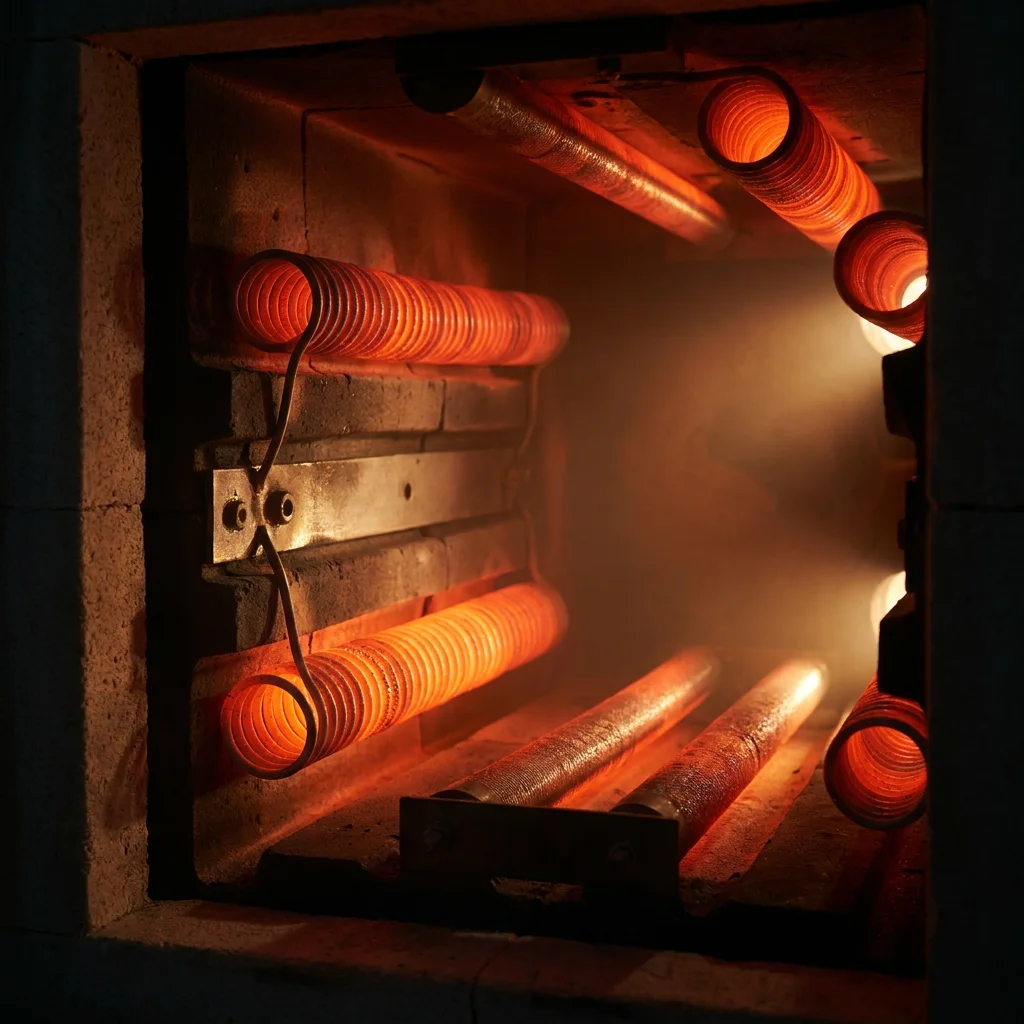
While Inconel provides the structural skeleton for high-temp environments, resistance heating wires provide the thermal energy. DLX Factory specializes in two primary categories: Nickel-Chromium (NiCr) and Iron-Chromium-Aluminum (FeCrAl) alloys.
1. NiCr 80/20 (Nikrothal 80)
Composed of 80% Nickel and 20% Chromium, this is the "gold standard" for high-end industrial and domestic heating. Its primary advantage is its superior mechanical strength when hot and its excellent ductility after long-term use. In 2026, NiCr 80/20 is increasingly used in precision laboratory furnaces and high-reliability automotive sensors where electrical stability is paramount.
2. FeCrAl Alloys (Kanthal / 0Cr25Al5 )
FeCrAl alloys offer a higher maximum operating temperature (up to 1425°C) and higher electrical resistivity compared to NiCr. They are also more cost-effective due to the absence of nickel. However, they become brittle after use. At DLX Factory, we have developed advanced grain-refining techniques that extend the life of FeCrAl elements in industrial kilns and high-speed heating applications.
III. Technical Parameter Tables
Accurate technical data is essential for design engineering. Below are the definitive parameters for the alloys discussed, reflecting DLX Factory's 2026 quality standards.
Table 1: Chemical Composition (%)
| Alloy | Ni (Nickel) | Cr (Chromium) | Fe (Iron) | Al (Aluminum) | Other |
| Inconel 600 | 72.0 min | 14.0-17.0 | 6.0-10.0 | - | Cu, Mn, Si |
| Inconel 601 | 58.0-63.0 | 21.0-25.0 | Balance | 1.0-1.7 | Mn, Si, C |
| Inconel 625 | 58.0 min | 20.0-23.0 | 5.0 max | 0.4 max | Mo 8.0-10.0, Nb 3.15-4.15 |
| Inconel 718 | 50.0-55.0 | 17.0-21.0 | Balance | 0.2-0.8 | Nb 4.75-5.5, Mo 2.8-3.3, Ti |
| NiCr 80/20 | 78.0 min | 19.0-21.0 | 1.0 max | - | Si, Mn |
| FeCrAl (A1) | - | 20.0-24.0 | Balance | 5.0-6.0 | Re (Rare Earths) |
Table 2: Electrical and Thermal Properties
| Alloy | Max Operating Temp (°C) | Specific Resistance (µΩ·m at 20°C) | Density (g/cm³) | Melting Point (°C) |
| Inconel 600 | 1150 | 1.03 | 8.47 | 1354-1413 |
| Inconel 601 | 1250 | 1.18 | 8.11 | 1360-1411 |
| NiCr 80/20 | 1200 | 1.09 | 8.40 | 1400 |
| FeCrAl (A1) | 1400 | 1.45 | 7.10 | 1500 |
IV. Comparative Performance Analysis
In 2026, the selection between these materials often hinges on two factors: oxidation resistance at 1200°C+ and electrical resistivity stability.
1. Oxidation Resistance at 1200°C+
At temperatures exceeding 1200°C, the chromium in Inconel 600 begins to struggle with rapid oxide scale growth. In contrast, Inconel 601 and FeCrAl alloys utilize aluminum to create an Alumina (Al2O3) scale. Alumina is significantly more stable at ultra-high temperatures than Chromia (Cr2O3). For continuous operation at 1250°C, DLX Factory recommends Inconel 601 or FeCrAl to prevent premature failure due to metal wastage.
2. Electrical Resistivity Stability
For precision heating, the "drift" in electrical resistance over time can ruin industrial batches. NiCr 80/20 exhibits the highest stability. Its resistance-temperature coefficient is remarkably consistent, allowing for precise PID control. FeCrAl, while having higher initial resistance, can experience subtle changes in resistivity as its aluminum content is consumed to maintain the oxide scale. In 2026, DLX has mitigated this in our "Pro-Stable" FeCrAl line through micro-alloying with Yttrium and Zirconium.
V. Industrial Applications: 2026 Sector Overview
The versatility of these alloys ensures their presence in nearly every high-tech sector of the global economy.
Industrial Furnaces & Heat Treatment: NiCr and FeCrAl wires are used for heating elements, while Inconel 601 is used for the structural hardware, such as rollers, trays, and heating shields.
Aerospace Thermal Management: Inconel 718 and 625 are critical for exhaust systems, turbine blades, and heat exchangers in the new generation of fuel-efficient jet engines.
Automotive Sensors & Emissions: High-purity NiCr wires are essential for oxygen sensors and diesel particulate filter (DPF) regeneration systems.
Renewable Energy Production: Inconel alloys are being utilized in concentrated solar power (CSP) plants to handle molten salts at high temperatures, a growing trend in the 2026 energy transition.
VI. 2026 Industry Trends: Efficiency and Sustainability
The landscape of 2026 is defined by two major shifts in thermal engineering:
1. Energy-Efficient Heating
With rising energy costs, industries are moving toward "High-Emissivity" coatings on resistance wires. DLX Factory is leading this trend by offering pre-oxidized wires that improve heat transfer efficiency by up to 15%, reducing the power required to maintain furnace temperatures.
2. Aerospace Lightweighting
As the aerospace industry targets net-zero emissions, the demand for thinner, stronger Inconel 718 foils and wires has surged. Advanced cold-rolling techniques now allow for ultra-thin sections that maintain high-temperature creep resistance, enabling lighter engine designs.
VII. Customer Pain Points and Technical Solutions
Through our years of global export experience at DLX Factory, we have identified the most common challenges faced by end-users.
Pain Point 1: Wire Brittleness
Problem: FeCrAl heating elements often snap during maintenance or after a few thermal cycles.
Solution: DLX Factory utilizes a secondary vacuum melting process to reduce impurities like Sulfur and Phosphorus, significantly improving the "as-fired" ductility of the wire.
Pain Point 2: Thermal Fatigue
Problem: Inconel components cracking under rapid heating and cooling cycles.
Solution: We offer specialized grain-size controlled Inconel 625, which provides better resistance to low-cycle fatigue, ensuring longer life in cyclic environments.
Pain Point 3: Inaccurate Heating (Electrical Drift)
Problem: Heating elements changing resistance over time, leading to uneven temperature distribution.
Solution: Our NiCr 80/20 undergo a proprietary "Stabilizing Anneal" that locks the crystal structure, ensuring resistance drift remains below 0.5% over 5,000 operating hours.
VIII. Technical FAQ
Q1: Can I use Inconel 600 in a sulfur-rich environment?
A: No. High nickel alloys like Inconel 600 are susceptible to "sulfidation" which leads to rapid catastrophic failure. In sulfurous atmospheres, we recommend FeCrAl alloys or low-nickel alternatives.
Q2: What is the main difference between NiCr 80/20 and FeCrAl in terms of cost?
A: FeCrAl is generally 20-40% cheaper because it contains no nickel. However, NiCr 80/20 often provides a lower "Total Cost of Ownership" (TCO) due to its longer life and ease of repair (it remains weldable after use).
Q3: Why is Inconel 718 so difficult to machine?
A: Its high strength and work-hardening rate make it tough on tools. DLX Factory provides Inconel 718 in optimized "Solution Annealed" states to improve machinability for our customers.
Q4: At what temperature does Inconel 625 lose its corrosion resistance?
A: While it maintains oxidation resistance up to 980°C, its mechanical strength begins to drop significantly above 650°C. For load-bearing applications at 800°C+, Inconel 718 or 601 are better choices.
Q5: Can DLX Factory provide custom wire diameters?
A: Yes. We offer precision drawing from 0.02mm to 12.0mm, with tolerances as tight as +/- 0.001mm for high-precision sensor applications.
Q6: Is FeCrAl magnetic?
A: Yes, FeCrAl is magnetic due to its high iron content. NiCr alloys are non-magnetic, which is a key requirement for certain electrical and electronic applications.
IX. Conclusion: The DLX Factory Advantage
In the high-stakes world of thermal management, the difference between success and failure lies in the microscopic details of the alloy. As a premier Chinese exporter and manufacturer, DLX Factory combines state-of-the-art metallurgical testing with high-volume production capabilities to deliver Inconel and resistance heating solutions that define the 2026 standard.
Our commitment to quality starts with raw material selection and continues through vacuum induction melting (VIM), electroslag remelting (ESR), and precision drawing. Whether you are designing a next-generation aerospace turbine or a high-efficiency industrial kiln, our technical team is ready to support your engineering requirements.
Request a Technical Quote
Are you looking for high-performance Inconel alloys or precision resistance heating wires for your next project? Contact the DLX Factory support team today for a comprehensive technical consultation and pricing.
Expert Material Selection: Our engineers will help you choose the right alloy for your specific temperature and corrosion profile.
Global Logistics: Direct export from our ISO-certified facilities in China to your facility, ensuring competitive pricing and reliable lead times.
Custom Specifications: Bespoke wire diameters, strip widths, and alloy compositions tailored to your 2026 production needs.
Website: www.dlxfactory.com
Building a more efficient thermal future, one alloy at a time.